What artificial intelligence reveals about how we work, and how to protect to what matters
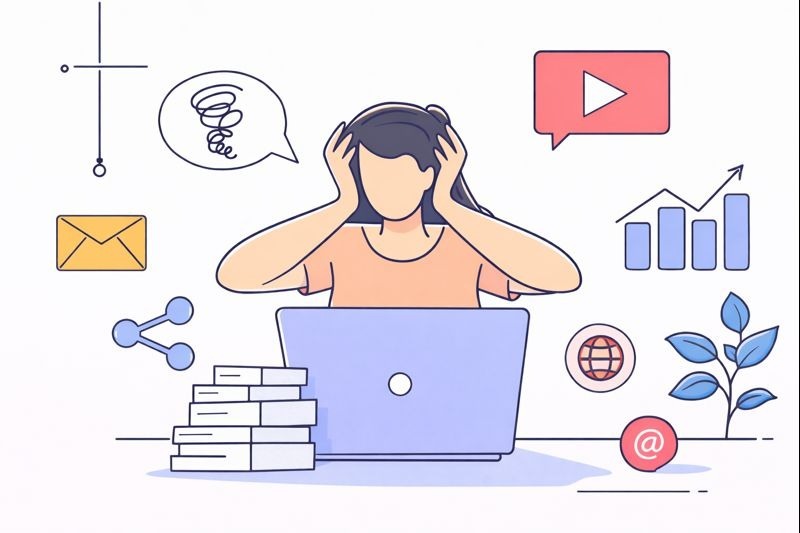 Generated with AI
I built an AI agent because I wanted relief. Relief from mental overload, from the constant switching between tasks, from the feeling that no matter how efficient I became, there was always more to manage. I believed that if I could automate enough of my work, if I could process information faster and respond more efficiently, I would finally feel ahead instead of behind.
And technically, it worked.
The agent could do almost anything I asked. It could read resumes, answer questions, guide workflows, and respond instantly. It didn’t get tired. It didn’t push back. It didn’t need context beyond what I gave it.
But that was exactly the problem.
There were no boundaries.
I could ask it anything, anytime, in any direction and it would respond. And slowly, uncomfortably, I realized that what I had built wasn’t just an assistant. It was a mirror. A reflection of how I move through my own life: always on, constantly responding, endlessly available. At work. At home. Mentally. Emotionally. Digitally.
The agent didn’t create this dynamic. It simply made it impossible to ignore.
The Illusion That More Capability Creates More Control
Like many people exploring AI, I assumed that increased capability would naturally lead to increased control. That if I could just do more I would feel more grounded. Instead, the opposite happened. The more capable the agent became, the more exposed my lack of boundaries felt.
This is where AI reveals something deeply human. AI does not decide what matters. It does not pause. It does not protect time or energy. It simply responds. When we place it inside a life or workflow that has no limits, it accelerates that pattern rather than fixing it.
Research consistently shows that digital tools do not automatically reduce overload. In fact, when boundaries are unclear, they often blur the separation between work and rest, creating a sense of constant availability and cognitive strain. The issue is not the technology itself, it’s the absence of intentional limits around how and when it is used.
That realization landed hard. You cannot use AI to organize your life if you haven’t defined what you want to protect.
AI Doesn’t Create Boundaries - It Operates Inside Them
This is the core lesson the agent taught me. AI cannot create structure for you. It can only operate within the structure you define. When that structure is missing, AI doesn’t fail - it faithfully reflects the absence of guardrails.
Analysts have warned about what happens when humans rely too heavily on intelligent systems without maintaining ownership of judgment. Over time, people begin to offload not just tasks, but thinking itself. The danger isn’t dramatic or immediate. It’s subtle. You stop questioning. You stop pausing. You stop deciding where your attention actually belongs.
Boundaries are what prevent that slide.
They define where AI ends and human responsibility begins. They ensure that AI remains supportive rather than consumptive as a tool that serves intention instead of replacing it. Without boundaries, AI becomes an extension of the “always on” culture many of us already struggle with. With boundaries, it becomes something else entirely - a container.
Why Boundaries Are a Human Responsibility - Not a Technical One
What became clear as I worked with the agent is that no tool can decide what deserves focus. That responsibility stays human. This is why many organizations insist on a human review step in critical workflows because judgment, context, and accountability cannot be automated away.
That same principle applies personally. If I don’t decide when enough is enough, AI will never do it for me. If I don’t define where my time ends and my rest begins, AI will happily keep going. It has no concept of sustainability, only responsiveness.
Boundaries are not about limitations. They are about preservation. They protect thinking. They protect energy. They protect the parts of work and life that require depth instead of speed.
Moving Forward With Intention
Building the agent taught me a lot about what AI can do. But more importantly, it taught me what I need to do. I need to create space before I automate. I need to define limits before I optimize. I need to decide what I am protecting before I ask a system to help me manage it.
That lesson extends beyond personal productivity. At Ready State, we see the same pattern with teams and leaders navigating AI. The question isn’t whether AI is powerful - it is. The question is whether we are intentional enough to use it without losing ourselves in the process.
Because if we don’t define our own limits, AI and life will just keep saying yes.